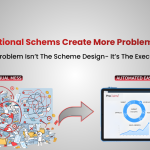
Field sales teams work hard. Early mornings preparing for the day. Long commutes between customer locations. Multiple meetings across territories. Late evenings completing documentation. The commitment is real and the hours are long.
Yet productivity often doesn’t reflect the effort invested. Sales targets get missed despite dedicated work. Customer coverage remains inconsistent despite full schedules. Team morale suffers despite genuine commitment.
The problem isn’t effort. The problem is how time gets allocated.
Where Field Sales Time Actually Goes
A typical field sales day involves multiple activities. Customer meetings form the visible core—presentations, relationship building, order discussions, problem solving. These are the activities that directly drive revenue and build business relationships.
Then comes travel time. Driving between customer locations. Navigating traffic. Covering geographical territories. This time is necessary but doesn’t create value. It’s overhead that supports customer visits but doesn’t generate sales.
Administrative tasks consume significant portions of the day. Visit reports need writing. Orders require manual entry into systems. Expense documentation needs compilation. Customer information requires updating. These tasks are necessary for business operations but don’t involve customers.
Information searching takes more time than expected. Product specifications need checking. Current pricing requires verification. Scheme eligibility needs calculation. Stock availability requires confirmation. These queries happen throughout the day, often interrupting customer interactions.
Coordination activities add another layer. Calling the back office for approvals. Messaging colleagues about customer issues. Updating managers on progress. Scheduling follow-ups. These communications are important but time-consuming.
Time analysis across field sales operations reveals a concerning pattern. Three to four hours daily—sometimes more—go to administrative tasks and information searching. That’s time not spent with customers. Time that could drive revenue being consumed by operational necessities.
The efficiency problem isn’t about working harder. It’s about reclaiming time from low-value activities so more hours can go toward high-value customer engagement.
How Mobile Automation Changes Time Allocation
Mobile sales automation addresses the time allocation problem directly. The goal isn’t to add more work or increase hours. The goal is to shift time from administrative overhead to customer-facing activities.
Real-time order processing eliminates evening data entry. When sales representatives can enter orders during or immediately after customer meetings, the evening desk session disappears. Orders get confirmed on the spot. Customers receive immediate acknowledgment. The representative’s evening becomes available for preparation or rest instead of paperwork.
Automated reporting reduces documentation burden. Instead of writing detailed visit summaries from memory hours later, representatives can capture key information during the visit through structured mobile forms. The system compiles this into reports automatically. What took 30 minutes of writing becomes five minutes of data entry.
Instant information access removes searching delays. Product details, current pricing, scheme eligibility, stock availability—all accessible through the mobile application during customer conversations. No need to call the office. No need to promise “I’ll check and get back to you.” Answers come immediately, enabling decisions during meetings rather than in follow-up calls.
Digital workflows streamline coordination. Order approvals route automatically. Customer issues get logged and tracked systematically. Team communication happens through the application. Status updates flow automatically rather than requiring manual messages.
Offline capabilities maintain productivity when connectivity is poor. The application works without internet, syncing data when connection returns. This eliminates the excuse of “I couldn’t update because there was no network” and ensures information flows regardless of connectivity challenges.
Route planning becomes more efficient with location intelligence. Representatives can see customer locations plotted geographically and plan optimal routes. Less time driving between widely separated customers. More time in productive meetings.
The Business Impact
When administrative burden shifts from manual to automated, several business outcomes improve measurably.
Customer interactions per day increase. Representatives freed from evening paperwork can add more customer visits to their schedules. Or they can invest more time in existing visits, building stronger relationships and understanding customer needs more deeply. Either way, customer-facing time expands.
Customer experience improves from instant responses. When representatives can confirm orders, verify pricing, check stock availability, and calculate scheme benefits on the spot, customers don’t wait for callbacks. Decisions happen during meetings. This responsiveness builds confidence and makes doing business easier.
Error rates decrease with systematic processes. Manual data entry creates transcription errors. Handwritten notes get misread. Memory-based reporting loses details. Automated capture at source eliminates most of these error opportunities. Order accuracy improves. Information quality increases.
Order-to-billing cycles shorten significantly. When orders enter the system during customer meetings rather than evening compilation, processing starts immediately. The one or two-day lag from manual handling disappears. Distributors receive confirmations faster. Finance processes orders sooner. Cash flow improves.
Team coordination improves through shared visibility. Managers can see field activity in real-time rather than waiting for end-of-day reports. They can identify representatives who need support. They can spot coverage gaps as they develop. Problems get addressed promptly rather than discovered weekly.
Data quality and availability improve for business decisions. When field information flows in real-time through systematic capture, management has current intelligence about market conditions, customer sentiment, competitive activities, and emerging issues. Decisions get made with fresher, more accurate information.
Field team satisfaction typically increases with automation. Representatives appreciate tools that make their work easier. The frustration of evening paperwork sessions disappears. The anxiety of forgetting important meeting details reduces. The professional capability to provide instant answers to customers builds confidence.
Zylemini+ Approach to Field Enablement
Zylemini+ is designed specifically for field sales realities in Indian markets. The mobile-first approach acknowledges that field teams work from phones, not desktops. Everything is optimized for small screens and touch interaction.
Offline functionality addresses connectivity challenges. Representatives can work throughout the day regardless of network availability. The application syncs data automatically when connection becomes available. This reliability is essential in markets where connectivity remains inconsistent.
Automated workflows reduce manual burden systematically. Order processing, visit documentation, scheme calculations, expense tracking—tasks that previously required manual handling now flow through structured digital processes. Time consumption drops dramatically while accuracy improves.
Real-time information access enables better customer conversations. Representatives have product catalogs, pricing, schemes, stock status, and customer history available during meetings. They can answer questions confidently rather than promising to follow up later.
Integration with distribution processes ensures information flows smoothly. Orders entered in the field route to distributors correctly. Inventory status reflects actual availability. Scheme eligibility calculations use current rules. The mobile application isn’t isolated—it’s part of the complete business system.
The focus throughout is enablement, not surveillance. The goal is giving field teams better tools to do their work effectively, not creating oversight mechanisms. Location tracking provides coordination support and route optimization, not micromanagement. Activity visibility helps identify team members who need assistance, not create punitive measures.
Time Is The Constrained Resource
Field sales teams can’t create more hours in the day. Working longer isn’t sustainable. The efficiency gains must come from using existing time better.
When three hours daily shift from administrative tasks to customer engagement, the math is compelling. For a fifty-person field team, that’s 150 additional customer-facing hours daily. 3,750 hours monthly. 45,000 hours annually. All without extending working hours or increasing headcount.
The opportunity isn’t about eliminating field sales roles or reducing teams. It’s about enabling existing teams to achieve more with the same effort by removing time drains that don’t create value.
Technology doesn’t replace the human elements of field sales—relationship building, understanding customer needs, solving problems, closing deals. Technology removes the operational friction that prevents field teams from focusing on these high-value activities.
Field sales will always require effort. Travel will always be necessary. Challenging days will still happen. But the nature of that challenge should be sales-related, not administrative. The hard work should go into customer engagement, not paperwork.
Organizations that understand this distinction are making different technology investments than those focused purely on cost reduction. They’re investing in field enablement that amplifies the impact of existing effort rather than trying to reduce effort itself.
The efficiency question for field sales isn’t “how can we make them work harder?” It’s “how can we remove obstacles that prevent their effort from translating into results?”
Mobile automation answers the second question. The first question was never the right one.
See how Zylemini+ enhances field sales efficiency at zylem.co.in
FAQs
Reps spend 3-4 hours daily on administrative tasks manual reporting, data entry and information searching instead of customer engagement and revenue generating activities.