December brings planning season. Boardrooms fill with discussions about 2026 targets. Sales teams prepare forecasts. Production schedules take shape. Marketing budgets get allocated. These decisions will define the next year’s trajectory.
Most of this planning relies heavily on one data source: primary sales figures. The numbers showing what manufacturers billed to distributors throughout 2025. Revenue reports. Territory-wise shipments. Product-wise dispatch data. This information forms the foundation of most annual planning exercises.
But primary sales data tells only half the story.
The Data Gap in Planning
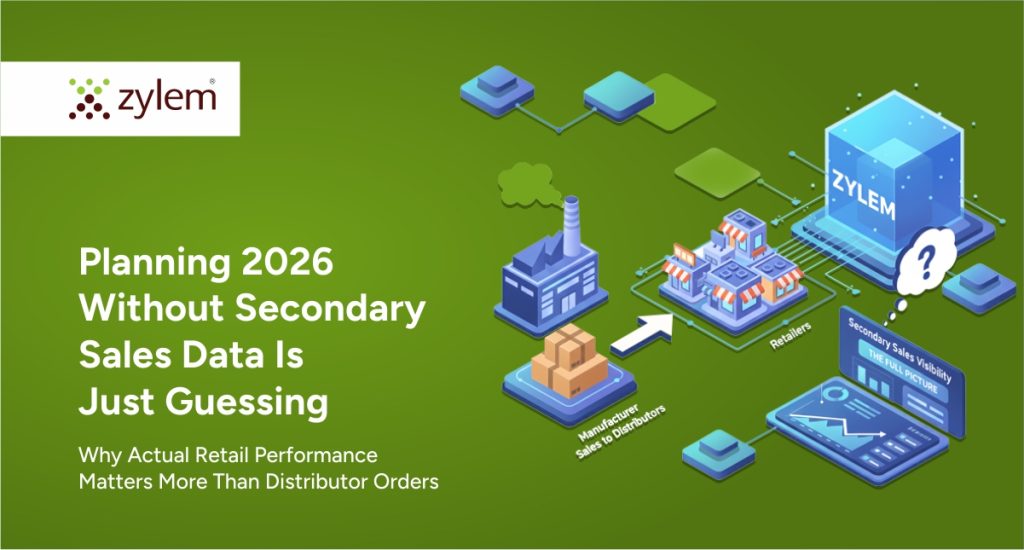
Primary sales represent transactions between manufacturers and distributors. Money changes hands. Products move from factory warehouses to distributor warehouses. These transactions are important—they generate revenue and track channel relationships.
Secondary sales represent what happens next. Distributors sell to retailers. Products move from distributor warehouses to retail shelves. This is where actual market demand becomes visible. This is where consumer preferences reveal themselves. This is where competitive dynamics play out.
The gap between these two numbers matters significantly for planning accuracy.
Consider what happens during promotional schemes. Manufacturers offer attractive incentives for increased purchases. Distributors respond by stocking up. Primary sales spike. The quarter looks excellent. Planning teams see strong demand and set ambitious targets accordingly.
But what if those products are still sitting in distributor warehouses three months later? What if retail offtake didn’t match distributor buying enthusiasm? The 2026 targets based on that spike will be built on temporary inventory movement, not sustainable market demand.
Regional variations create another planning challenge. Aggregate primary sales numbers might show healthy growth. But secondary sales data could reveal that three territories are genuinely growing while two others are declining. The growth regions are masking problems in struggling areas. Without secondary visibility, resources get allocated based on primary sales patterns that don’t reflect retail realities.
Product performance presents similar issues. A product might show strong primary sales because distributors are fulfilling their commitments or chasing volume incentives. Meanwhile, secondary sales data might show that product sitting in inventory while a different variant moves quickly at retail. Production planning based only on primary sales will overestimate demand for one product and underestimate another.
What Secondary Data Reveals
Secondary sales data provides visibility into actual market dynamics. This information transforms planning from educated guessing to data-driven decision-making.
Regional demand patterns become clear. Instead of seeing aggregate national numbers, businesses can identify which specific territories are experiencing genuine growth. Markets showing strong secondary sales deserve investment and attention. Those with weak retail offtake need investigation and potentially different strategies.
True product performance emerges. Some products generate high primary sales but low secondary movement—distributors are stocking them but retailers aren’t buying them aggressively. Other products might show modest primary sales but strong secondary performance—supply isn’t keeping pace with actual demand. This distinction matters enormously for production planning.
Seasonal trends based on retail offtake provide better forecasting foundations. Primary sales might show spikes during scheme periods or quarter-ends. Secondary sales reveal actual consumption patterns throughout the year. Understanding when products actually sell to end customers enables more accurate inventory and production timing.
Inventory health across the channel becomes visible. Products aging in distributor warehouses represent capital tied up and potential obsolescence risk. Fast-moving products with low distributor inventory signal supply opportunities. This visibility enables better working capital management and reduces waste.
Competitive intelligence comes as a byproduct. When secondary sales in a region decline while distributors maintain primary purchases, competitor activity is often the cause. Early visibility into market share shifts enables faster strategic response.
Planning Decisions That Need Complete Data
Territory-wise target setting becomes more accurate with secondary sales visibility. Targets based purely on primary sales might be unrealistic in regions where distributor warehouses are already full. Conversely, regions with strong retail offtake but conservative distributor ordering might be underestimated. Secondary data grounds targets in market reality.
Product-wise production planning aligns better with actual consumption. Manufacturing capacity gets allocated to products that consumers are actually buying, not just products distributors are stocking. This reduces inventory risk and improves capital efficiency.
Marketing budget allocation becomes more strategic. Spending goes to regions and products showing genuine market traction based on retail performance, not just distributor relationships. This improves marketing ROI and supports growth in areas with real potential.
Scheme design improves when based on what actually drives retail sales. Some incentive structures encourage distributor stockpiling without corresponding retail movement. Others genuinely stimulate market demand. Secondary sales data reveals which schemes deliver real results versus which create temporary primary sales bumps.
Distributor support gets allocated more effectively. High-performing distributors based on secondary sales deserve different support than those with high primary purchases but weak retail offtake. The former are genuinely growing the market. The latter might need help with retail activation.
New product launches benefit from understanding which regions and channels show strongest consumption patterns for similar products. Launch strategies become more targeted and resource allocation more efficient.
The Cost of Incomplete Planning
Setting 2026 targets based only on primary sales creates several risks. Targets might be too aggressive in regions where 2025 primary sales were inflated by inventory buildup. Distributors can’t maintain unsustainable purchase levels. When they inevitably scale back to clear existing stock, the business faces unexplained shortfalls against targets that were never realistic.
Production planning misaligned with actual market demand leads to inventory issues. Manufacturing too much of slow-moving products ties up capital and creates obsolescence risk. Producing too little of fast-moving items creates stockouts and missed revenue. Both problems stem from planning based on distributor purchases rather than consumer demand.
Marketing investments in wrong priorities waste resources. Budgets allocated to regions or products based on primary sales might miss real opportunities visible only in secondary data. Spending follows what distributors are buying rather than what markets are actually consuming.
The opportunity cost of missing growth areas hurts long-term competitive position. Regions with strong retail performance but conservative distributor ordering deserve more attention and resources. Without secondary visibility, these opportunities remain hidden while resources flow to areas that look good on primary sales reports but lack underlying market momentum.
Reactive mid-year adjustments become necessary when reality doesn’t match plans built on incomplete data. These adjustments are disruptive, expensive, and damage confidence in the planning process. They also mean the business spends the first half of 2026 executing against unrealistic plans before corrections happen.
How Zylem Supports Better Planning
Zylem addresses the planning data gap by extracting secondary sales information systematically from distributor networks. The platform pulls sales, purchase, and stock data from various systems distributors use, eliminating the need for manual reporting or system changes at the distributor end.
Historical trends and patterns become accessible for analysis. Planning teams can examine not just the most recent quarter but seasonal patterns over multiple years. This historical context grounds forecasts in proven patterns rather than assumptions.
Regional and product-wise analysis becomes straightforward. Data can be sliced by territory, product category, distributor type, or any other relevant dimension. This granularity enables precise planning rather than broad national averages.
Comparative performance views reveal which territories and products are genuinely outperforming versus which are riding temporary trends. This distinction guides resource allocation decisions.
The platform transforms secondary sales data into planning intelligence. Rather than raw numbers requiring extensive manual analysis, information is presented in ways that directly support planning decisions. Territory potential assessments. Product demand trends. Inventory health indicators. Market share movements.
Planning becomes collaborative when all stakeholders work from the same complete data picture. Sales teams, production planners, finance, and marketing can align their 2026 strategies based on shared visibility into actual market performance.
Planning With Complete Visibility
2026 planning is happening now across manufacturing organizations. The data foundation chosen for this planning will shape next year’s outcomes. Decisions made with complete market visibility—including what actually sold at retail level—stand on firmer ground than those based solely on manufacturer-to-distributor transactions.
Primary sales data remains important. It tracks channel relationships, revenue, and distributor performance. But planning for growth requires understanding not just what distributors purchased, but what markets consumed. Not just what left factory warehouses, but what reached end customers.
Secondary sales visibility doesn’t make planning easy—markets remain complex and competitive pressures persist. But it does make planning more accurate. Targets become achievable rather than aspirational. Production aligns with demand rather than hope. Resources flow to genuine opportunities rather than comfortable assumptions.
The manufacturers setting realistic, data-grounded 2026 plans are those who can see their complete market picture. Those planning based on partial visibility are making educated guesses. The difference between these approaches will become clear when 2026 results arrive.
Learn how Zylem provides secondary sales intelligence for better planning at zylem.co.in
FAQs
Overly aggressive targets in inventory heavy regions, production misaligned with demand, marketing budgets in wrong areas and missed growth opportunities in high consumption territories.