The $615 Billion Question. Is Your Distribution Stack Built for India’s Next FMCG Growth Phase?
What Connected DMS, SFA, and Claims Systems Mean for Mid-Size Brands Entering FY27
India’s FMCG sector is projected to cross $615 billion by 2027 according to IBEF. The growth opportunity is massive. But where this growth comes from and how it is captured has fundamentally changed. Volume-driven scale is no longer enough. The brands that will win in FY27 and beyond are the ones built on data-driven agility, operational precision, and connected distribution infrastructure.
The shift is already visible. Quick commerce accounts for 60 to 75 percent of online FMCG sales. D2C brands are scaling through platforms without ever touching a traditional distributor. ONDC is democratizing market access so that a regional brand in Rajasthan can reach consumers in Bengaluru without a national distribution network. The rules of distribution are being rewritten.
For mid-size FMCG brands, this creates both opportunity and risk. The opportunity is that technology has leveled the playing field. You no longer need the distribution depth of an HUL or ITC to compete nationally. The risk is that if your distribution operations still run on spreadsheets, WhatsApp, and month-end reconciliation, you are structurally slower than every competitor using a modern secondary sales management software to run their operations.
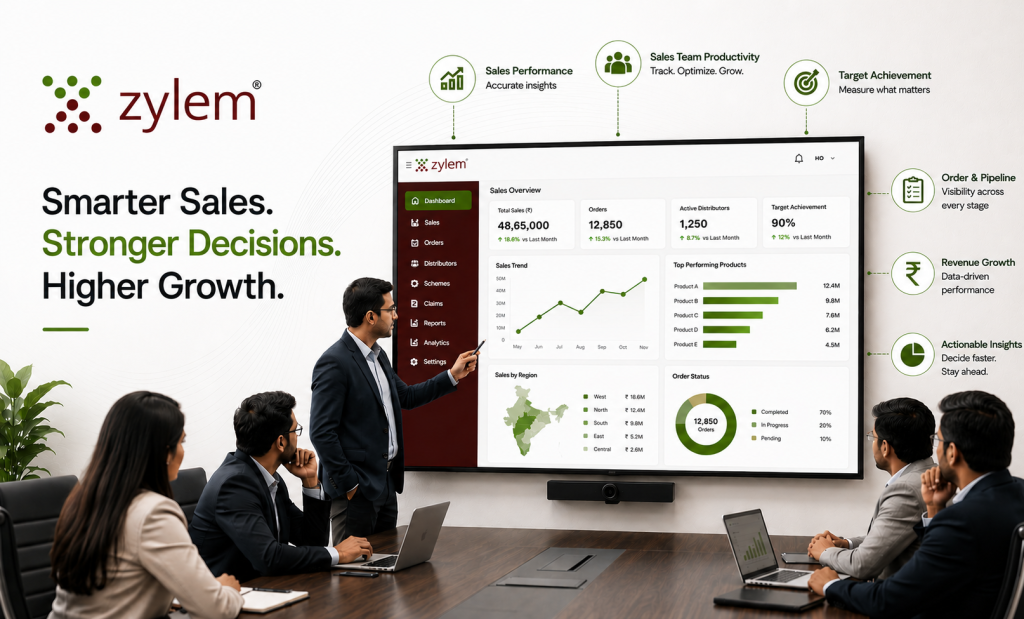
At Zylem, we see this inflection point playing out across our client base. The brands that connect their distribution management, field sales automation, and claims processing into a single platform are the ones growing fastest. The ones still running these as separate, manual processes are falling behind. Here is why the connected stack matters and what it looks like in practice.
Why Disconnected Systems Create Disconnected Growth
Most mid-size FMCG brands in India have some level of technology in their distribution operations. They might have a distributor billing software. They might give their field reps a mobile app for attendance. They might use Tally for accounting. But these tools do not talk to each other.
The distributor billing system does not know what the field rep captured at the retail outlet. The field rep app does not know what stock the distributor is holding. The accounting system does not know what claims are pending or what schemes were applied in the field. Each system holds a piece of the picture. Nobody has the complete view.
This fragmentation creates specific operational problems. Demand forecasting is inaccurate because it is based on primary sales data alone without secondary sales visibility. Stockouts happen because nobody can see distributor inventory levels in real time. Trade scheme leakage compounds because claim verification requires manual cross-referencing across multiple systems. Each of these problems has a direct revenue or margin impact.
The Connected Distribution Stack
A connected distribution stack brings three operational layers into one integrated platform.
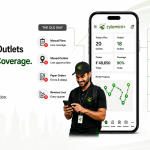
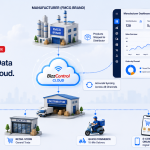
The first layer is Distribution Management. This is the backbone. BizzControl handles everything that happens at the distributor level. Inventory management, order processing, billing, pricing, secondary sales tracking, and claims settlement. Every distributor in the network operates on the same system with real-time data flowing to the brand.
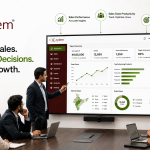
The second layer is Sales Force Automation. Zylemini+ manages everything that happens in the field. Beat planning, route optimization, order capture, scheme application, retailer visits, and real-time reporting. The field team’s work feeds directly into the distribution management layer without manual data transfer.
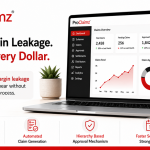
The third layer is Claims Management. ProClaimz automates the scheme-to-claim lifecycle. Schemes configured at the head office are applied automatically in the field through Zylemini+ and tracked through BizzControl. Claims are generated from actual transaction data. Verification is automated. Settlement is fast and accurate.
When these three layers are connected through a secondary sales management system, the entire distribution operation runs on a single source of truth. An order captured by a field rep in Nashik at 11 AM is visible to the distributor, the area manager, and the head office simultaneously. The scheme applied on that order is already reconciled. The secondary sales data is already feeding into the demand forecast. Nothing needs to be re-entered, recalculated, or reconciled manually.
What Mid-Size Brands Gain from Integration
The most immediate gain is speed. When data flows in real time across the distribution network, decisions happen faster. A pricing change rolls out in minutes instead of days. A stockout at a high-priority distributor triggers a replenishment alert immediately instead of being discovered during the next weekly review.
The second gain is accuracy. Manual data transfer between systems introduces errors at every handoff point. When a field rep’s order goes from a paper form to a WhatsApp message to a distributor’s billing system to a brand’s ERP, each step is an opportunity for data degradation. A connected platform eliminates these handoff points entirely.
The third gain is margin protection. Trade scheme leakage, pricing errors, and claim disputes all erode margins. An integrated platform enforces correct pricing, automates scheme application, and generates auditable claims. The 3 to 6 percent margin leakage that plagues manual operations drops significantly.
The fourth gain is scalability. Adding a new distributor, expanding into a new territory, or launching a new product line requires minimal incremental effort when the platform is already in place. Each new node plugs into the same system and inherits the same workflows, visibility, and controls.
The Competitive Reality of FY27
India’s FMCG landscape in FY27 will be defined by three converging forces. Quick commerce will continue expanding into Tier 2 cities. D2C brands will keep growing through platform-first distribution. And traditional distribution will remain the volume engine for over 90 percent of FMCG sales.
The brands that thrive will be the ones that can operate across all three channels simultaneously. They will need real-time visibility into general trade performance to make quick decisions. They will need accurate secondary sales data to feed their demand forecasting models. They will need automated trade promotion management to protect margins while competing aggressively for shelf space.
None of this is possible with disconnected systems. It requires an integrated distribution stack that connects every node in the network from the field rep at the outlet to the finance team at the head office.
Building the Stack at Your Own Pace
At Zylem, we understand that not every brand can deploy all three layers simultaneously. Many of our clients start with BizzControl to get distributor operations on a single platform. Once primary and secondary sales visibility is established, they add Zylemini+ for field sales automation. ProClaimz typically follows when scheme complexity reaches a point where manual claims processing becomes unsustainable.
The platform is designed for phased adoption. Each layer delivers standalone value. But the compounding benefits of integration become visible as soon as the second layer is connected. A brand running BizzControl alone gets distributor visibility. A brand running BizzControl plus Zylemini+ gets end-to-end demand and supply visibility. A brand running all three gets a fully automated distribution operation with real-time data, automated claims, and margin protection built in.
The question for every mid-size FMCG brand entering FY27 is straightforward. Is your distribution stack built for where the market is going? If the answer is no, the cost of delay is measured in lost revenue, eroded margins, and competitive ground that gets harder to recover with each passing quarter. Explore how Zylem’s secondary sales management software can give you the connected visibility your business needs.
Talk to our team at Zylem to see how BizzControl, Zylemini+, and ProClaimz can work together for your distribution network. We will start with what matters most for your business and build from there.
Frequently Asked Questions
A connected distribution stack is an integrated technology platform that links Distribution Management (DMS), Sales Force Automation (SFA), and Claims Management into a single system. Data flows in real time between all three layers, eliminating manual handoffs and providing end-to-end visibility across the distribution network.
Zylem offers three integrated products. BizzControl is a cloud-based Distribution Management System. Zylemini+ is a Sales Force Automation platform for field sales reps. ProClaimz is a scheme management software for scheme & claim management.
Yes. Zylem's platform is designed for phased adoption. Many brands start Zylem for secondary sales visibility then BizzControl for entire distribution management, then add Zylemini+ for field sales, and ProClaimz for claims automation as their operations scale.
When secondary sales data from the field flows in real time through the SFA to the DMS, brands can see actual consumer demand at the market level. This is far more accurate than forecasting based on primary sales data alone, which only shows what distributors ordered.
Primary sales refer to the movement of goods from the brand to the distributor. Secondary sales refer to the movement from the distributor to the retailer. Secondary sales data gives brands a much more accurate picture of actual market demand.
Integration protects margins by automating trade scheme application, preventing pricing errors, detecting duplicate claims, and enforcing scheme rules consistently across the network. Manual processes typically leak 3 to 6 percent of margin through these error points.
Yes. Any brand that sells through a multi-tier distributor network can use Zylem's platform. This includes consumer durables, pharmaceuticals, agrochemicals, building materials, auto parts, and industrial products.
The platform provides a single source of truth for pricing and inventory across all channels. This reduces the pricing inconsistencies between general trade, modern trade, and quick commerce that erode distributor trust.
Zylem serves mid-size and large manufacturers. Whether you have 20 distributors or 2,000, the platform scales to match your network size and complexity.
Zylem is designed to integrate with leading ERP platforms and accounting software including Tally. Data flows between Zylem and your ERP without manual re-entry.
ROI varies by brand size and complexity. Typical improvements include higher outlet coverage, reduced scheme leakage, faster claims settlement, and better demand accuracy. Most brands see operational improvements within the first quarter of deployment.
Quick commerce is forcing traditional distribution to become faster and more data-driven. Brands that lack real-time visibility into their general trade operations lose volume to quick commerce platforms that operate on live demand data.
Yes. Zylem supports multi-state, multi-tier distribution networks. Distributors across all states operate on the same system with centralized visibility and control at the head office.
Deployment timelines depend on network size and the number of products being implemented. Zylem team works in phases. BizzControl deployments typically go live within weeks. SFA and claims modules follow based on the brand's priorities.
Visit zylem.co.in or contact the Zylem team to schedule a consultation. The team will assess your current distribution operations and recommend a phased implementation plan.