Your Field Rep Covers 11 of 20 Outlets a Day Here Is What That Costs You Every Quarter
The Hidden Revenue Leak in Manual Beat Planning and How Sales Force Automation Closes the Gap
Every FMCG sales manager knows the number. Twenty outlets on the beat plan. Eleven visited by end of day. The remaining nine pushed to tomorrow, where they will compete with another twenty. This is not a staffing problem. It is a systems problem. And it is costing FMCG companies across India far more than most realize.
Industry estimates suggest that FMCG companies running manual field sales processes lose 20 to 30 percent of potential revenue every quarter. Not to competitors. To their own operational inefficiency. Missed outlets, incorrect scheme applications, paper-based order capture, and delayed reporting create invisible gaps that add up to lakhs in lost sales every single month.
We built Zylemini+ to close exactly these gaps. It is a sales force automation software designed specifically for the realities of Indian FMCG distribution. We are sharing what we see across our client base because the pattern is remarkably consistent. The problem is always the same. The fix is always the same. Only the scale differs.
Where the Day Goes Wrong
A typical field sales rep in India starts the day with a beat plan. In most companies, that plan is a list on a piece of paper or a WhatsApp message from the area sales manager. The rep decides the route based on experience, convenience, and sometimes just habit.
By midday, traffic has eaten into the schedule. One retailer was not at the shop. Another had a long conversation about a pending credit note. The rep is now behind. The easiest outlets to skip are the ones that ordered less last time. The problem is that low-order outlets are often low-order outlets precisely because they are under-serviced. Skipping them creates a self-reinforcing cycle of neglect.
By evening, the rep calls the manager with an approximation. Roughly this many orders. Roughly this much value. The manager records it in a spreadsheet. The actual numbers will not be confirmed until tomorrow or the day after. Sometimes they are never confirmed at all.
This sequence plays out across thousands of FMCG field teams in India every day. It is not because the reps are lazy. It is because the tools they are given make it impossible to do better.
The Financial Cost of Manual Operations
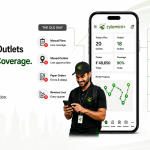
An FMCG field rep covering 20 outlets a day but only reaching 11 is operating at 55 percent coverage. That means 45 percent of planned retail touchpoints are not being serviced on schedule.
Each missed outlet is a missed order opportunity. Across a month, if a rep covers 22 working days with a 9-outlet daily shortfall, that is 198 missed outlet visits. If even 30 percent of those visits would have generated an order, that is roughly 60 lost orders per rep per month. Multiply that by the number of field reps in your team and the revenue impact becomes very real.
Then add scheme leakage. When trade schemes are communicated through WhatsApp messages and applied from memory, errors are inevitable. Reps apply outdated discounts. They miss applicable schemes entirely. They over-apply schemes to close orders faster. Industry data suggests that manual scheme handling leads to 3 to 6 percent margin leakage across the network.
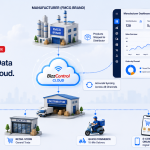
Then add the reporting lag. When secondary sales data reaches the brand two or three days after the transaction, demand forecasting is always running behind reality. Replenishment decisions are based on stale data. Stockouts happen because nobody saw them coming.
What Sales Force Automation Actually Does
Sales Force Automation is not a CRM. CRM tools manage leads and pipelines for B2B sales cycles with named accounts. FMCG selling is fundamentally different. The unit of work is the outlet visit, not the deal. The volume is thousands of small transactions across a fragmented retail network. A purpose-built sales force automation software handles the specific operational needs that CRM was never designed for.
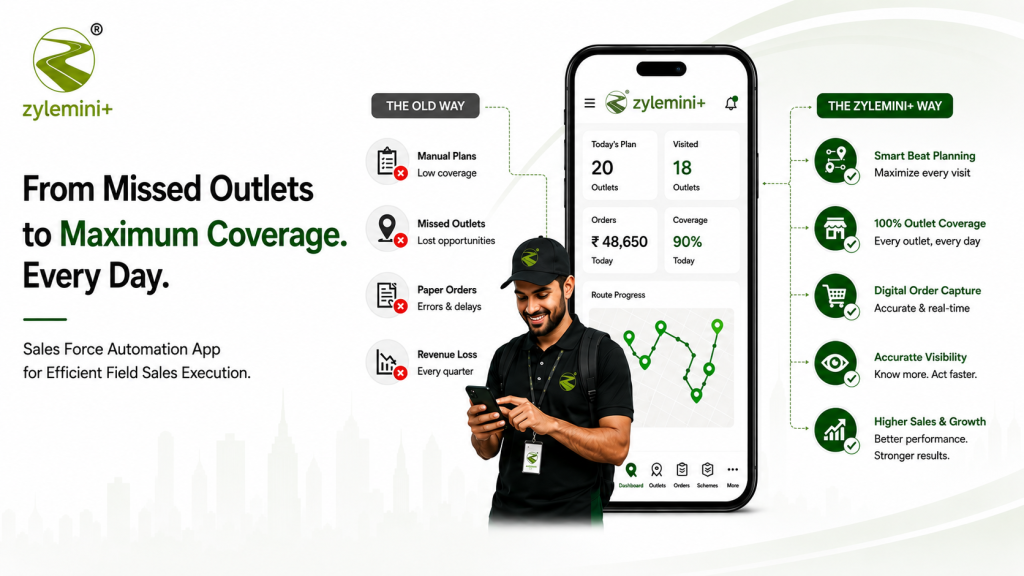
It starts with intelligent beat planning. The system generates optimized visit sequences based on outlet priority, geographic proximity, and historical order patterns. Reps follow a route that maximizes coverage within the available time.
Orders are captured digitally at the point of sale. Scheme rules are applied automatically based on the current configuration. There is no room for manual error because the system enforces the correct pricing and discount structure. The order syncs to the distributor in real time, triggering fulfillment without any manual communication step.
Attendance, location tracking, and visit logs are captured automatically. Managers can see exactly where their team is, which outlets have been covered, and what orders have come in. This is not surveillance. It is operational visibility that allows managers to intervene when things go off track instead of discovering the problem three days later.
The Coverage and Revenue Impact
FMCG companies that switch from manual to automated field operations consistently report measurable improvements. Coverage rates improve because reps are following optimized routes instead of self-selected ones. Order accuracy improves because schemes are applied systematically. Reporting becomes real-time instead of next-day.
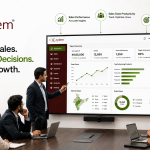
The revenue impact comes from multiple sources. More outlet visits mean more order opportunities. Correct scheme application means margin protection. Real-time data means faster demand response. All of these compound over time. A 15 percent improvement in daily outlet coverage across a 50-person field team translates to hundreds of additional orders every month.
At SAPL , our clients using Zylemini+ consistently see improvements in productive calls, order values, and coverage compliance within the first quarter of deployment. The gains are not theoretical. They show up in the secondary sales numbers.
Why Indian FMCG Needs India-Specific SFA
India’s FMCG field selling environment has specific challenges that global SFA platforms do not address well. Connectivity is inconsistent. Reps in Tier 2 and Tier 3 towns often work in areas with poor mobile data. An SFA platform that requires constant internet connectivity is useless in these conditions. Zylemini+ works offline and syncs when connectivity is available.
The distributor ecosystem is layered. Super stockists, distributors, sub-distributors, and direct retailers all coexist in the same territory. The SFA needs to understand this structure and route orders correctly based on the channel hierarchy. Generic platforms treat every outlet the same way, which creates operational confusion.
The Decision Is About Revenue Not Technology
FMCG companies do not adopt Sales Force Automation because they want more technology. They adopt it because they are tired of losing revenue to gaps they cannot see. Every outlet visit that does not happen is money left on the table. Every scheme applied incorrectly is margin given away. Every day of delayed reporting is a day of flying blind.
Zylemini+ is built for the brands that sell through India’s fragmented retail network and need every outlet visit to count. If your field team is covering 11 out of 20 outlets a day, the cost of inaction is already significant. The longer you wait, the more it compounds.
Talk to our team at Zylem to see how Zylemini+ can improve your field coverage, order accuracy, and secondary sales visibility starting from the first month.
Frequently Asked Questions
Sales Force Automation (SFA) for FMCG is software that digitizes and structures the work of a field sales team. It covers beat planning, route optimization, order capture, scheme application, attendance tracking, and real-time reporting. Unlike CRM, SFA is built for high-frequency field execution across thousands of small retail outlets.
CRM is built for relationship-led B2B selling with named accounts and deal pipelines. SFA is built for high-frequency outlet visits where the unit of work is the visit, not the deal. CRM manages relationships. SFA manages execution at scale.
Beat planning is the process of assigning specific retail outlets to field sales reps for daily visits. A beat plan determines which outlets are visited on which days of the week. Manual beat plans are often inefficient. SFA platforms optimize beat plans based on outlet priority, geography, and order history.
Industry estimates suggest that FMCG companies running manual field sales processes lose 20 to 30 percent of potential revenue every quarter. This loss comes from missed outlet visits, incorrect scheme application, delayed reporting, and stockout blindness.
Zylemini+ is Sales Force Automation platform built specifically for FMCG distribution. It is designed for brands that sell through distributor-retailer networks and need real-time visibility into field execution, order accuracy, and coverage compliance.
Yes. Zylemini+ is built for Indian field conditions where internet connectivity is inconsistent. The platform works fully offline and syncs data automatically when connectivity is restored. This ensures uninterrupted field operations in Tier 2 and Tier 3 markets.
SFA improves coverage by generating optimized visit routes based on outlet location, priority, and historical order patterns. Reps follow routes designed to maximize the number of productive visits within available time. This eliminates self-selected routing and reduces travel waste.
Scheme leakage occurs when trade promotions are applied incorrectly in the field. Manual scheme communication through WhatsApp or verbal instructions leads to errors. SFA platforms apply scheme rules automatically at the point of order capture, eliminating manual mistakes and protecting margins.
Real-time reporting gives managers visibility into field activities as they happen. They can see outlet coverage, order values, attendance, and location data without waiting for end-of-day summaries. This allows faster intervention when performance gaps emerge.
SFA manages the field team and captures demand at the outlet level. A DMS manages distributor operations including inventory, billing, and fulfillment. When connected, SFA sends orders directly to the distributor through the DMS, creating a seamless flow from order capture to delivery.
Deployment timelines depend on team size and territory complexity. Zylemini+'s implementation team works in phases, starting with pilot territories before scaling. Most field teams are trained and operational within the first few weeks.
Zylemini+ works for field teams of all sizes, from 10-person teams at growing brands to 500+ person teams at established companies. The platform scales as your distribution network grows.
Yes. Zylemini+ captures GPS-based location data during outlet visits. This helps managers verify visit compliance and identify coverage gaps. It is an operational visibility tool, not a surveillance mechanism.
You can visit zylem.co.in or contact the SAPL team to schedule a demo. The team will walk you through how Zylemini+ works for your specific field sales setup and discuss expected improvements in coverage and revenue.